Maybe it’s a willow oak that has outgrown the front yard, a pine with a brown top, a water oak that dropped a limb on a still afternoon, or a stump the last owner left by the fence. Rock Hill Tree Care Co. handles all of it: tree removal, trimming and pruning, stump grinding and storm cleanup for homes in Rock Hill and the towns nearby.
Rock Hill grew up under big shade trees, and many of them are now old enough to need attention. Summer thunderstorms test them every year. The red clay they stand in holds water after a wet week, and that loosens the grip of a tall tree’s roots.
Getting started is simple. Tell us about the tree by phone or through the form. We set a time, come out, look at it with you, and give you a free quote before anything is cut.
You don’t have to know what the tree needs. Plenty of calls begin with "I’m not sure if this is a problem." The visit is free, and the decision stays yours.
Each service has its own page: tree removal, tree trimming, stump grinding and emergency tree service.
Call 803-267-5527 or use the form. For a tree that is down on a house, a car or the driveway, pick up the phone.
Free quote. No obligation.
Nearly every call fits one of these four.


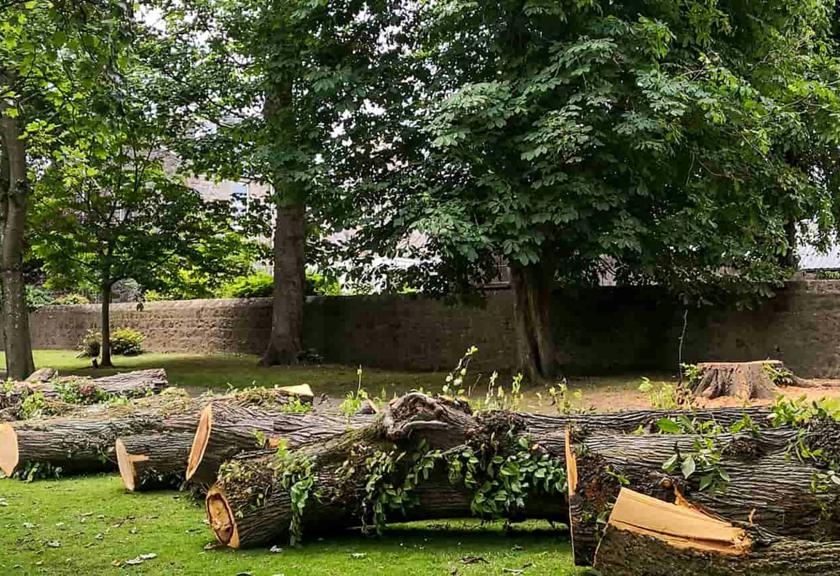
Most people would rather keep a tree than lose it, and often they can. Removal is for the ones past saving: a water oak hollowed out at the base, a pine killed by beetles, a trunk that split in the last storm, or a tree whose roots are lifting the driveway.
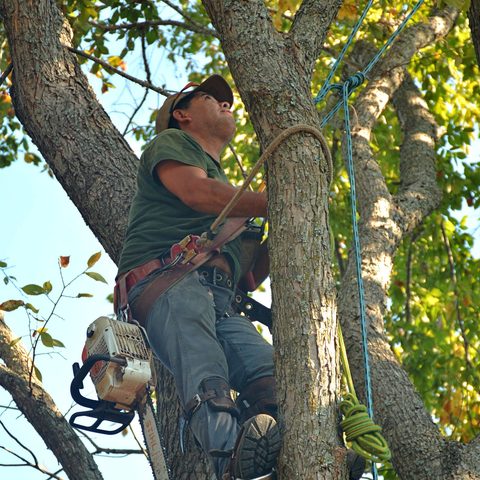
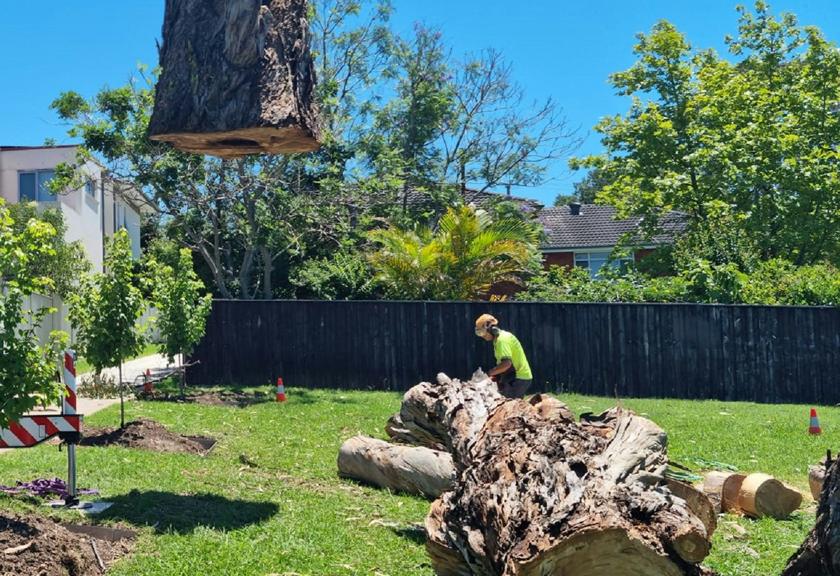
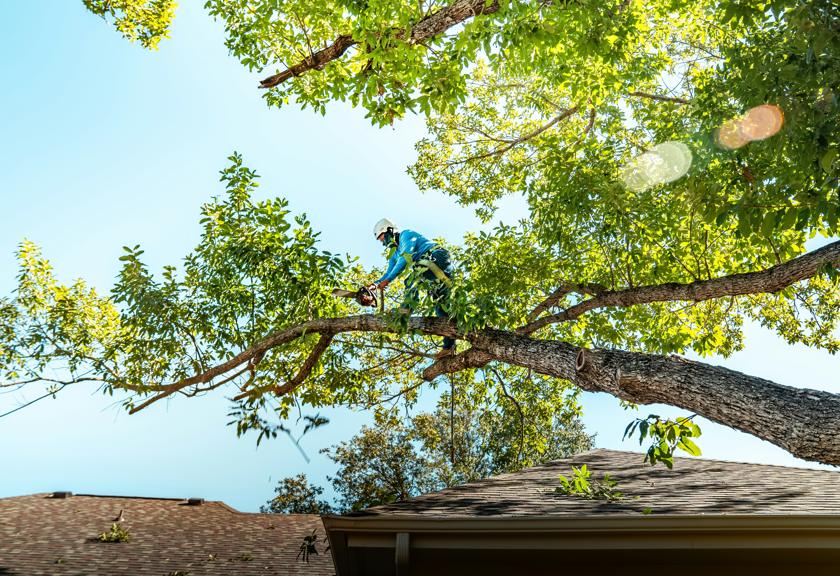
Tree cutting in an established neighborhood seldom means laying the tree down whole. A house sits on one side, a fence on another, and the neighbor’s shed is closer than you’d think. So the usual method is to take the tree apart from the top. A climber cuts it into manageable pieces and lowers them by rope. Where the tree and the site call for it, a lift or a crane does part of that work.
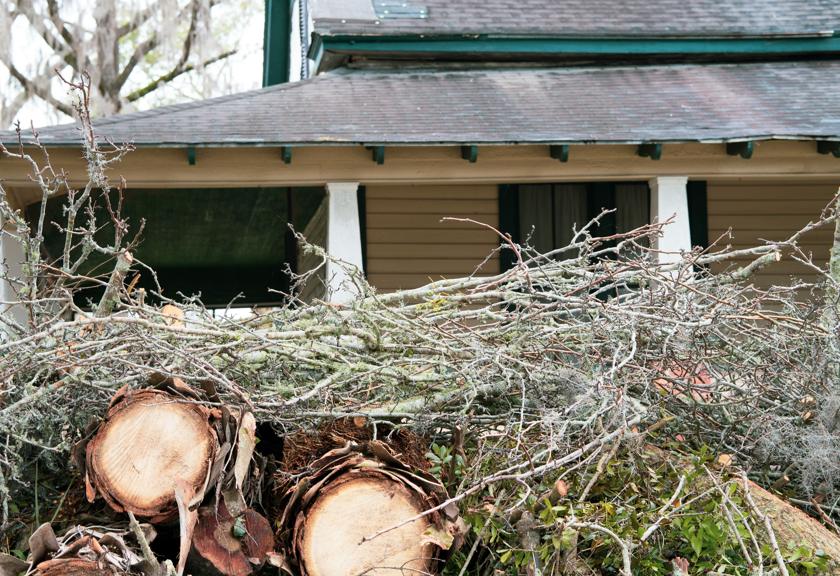
After the tree is down, what’s left is brush, logs and a stump. Say how you want each handled when we look at the job. The tree removal page goes through the whole process, and 803-267-5527 is the number to call for a quote.
Regular tree care pays off. A tree that gets pruned now and then gives far less trouble than one left alone until something breaks. Branches lying on a roof scrape the shingles every time the wind moves them. Dead limbs let go without warning. A crown that has filled in too tightly catches more wind than it should.
How the cuts are made matters as much as how many. A branch removed at the collar, the slight swelling where it joins the trunk, leaves a wound the tree can close. Stubs and flush cuts don’t close well. Stripping out a third of the leaves in one visit sets a tree back, and cutting the top off flat is the surest way to ruin its shape and its strength.
Timing matters for tree pruning as well. Oaks do best when pruned in winter or early spring. Pines are better left alone in the heat, when fresh cuts attract bark beetles. A limb that is dead, cracked or hanging is different: it can come out in any month. There is more on the tree trimming page.
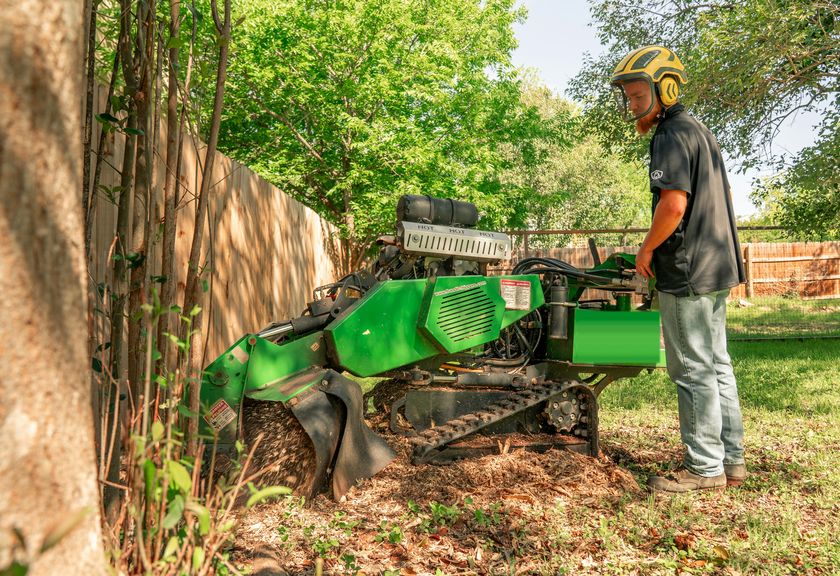
Once a tree is cut, the stump stays put for a long time unless someone deals with it. It sends up shoots, it trips the mower, and it turns soft and crumbly in place. A grinder takes it down beneath the grass line and turns it into a mound of chips.
What you do with those chips is up to you. They work as mulch around shrubs. For a patch of new grass, most of them need to be raked out and replaced with soil first. If the plan is a new tree in the same place, a patio or a shed, mention it before the grinding starts so the stump can be dealt with accordingly.
Grinding is what nearly everyone means when they ask for stump removal. Pulling the stump and its roots out of the ground whole is heavy work that mostly belongs on building sites. The stump grinding page explains the difference.
Is a tree lying on your house, your car or across the drive? Call 911 if someone is injured or pinned, or if anything is burning. Keep clear of any wire the tree has touched and let your power company know. After that, call 803-267-5527.
With a tree on a roof, the priority is keeping the damage from getting worse. The weight has to come off the house in a controlled way, piece by piece, without letting the trunk drop the rest of the distance.
A tree that has fallen is not at rest. Limbs are bent under the trunk, the trunk may be propped on a single branch, and the whole thing can move when one piece is cut. It is a job for ropes and rigging, not for a homeowner’s saw.
Before anything is shifted, photograph the damage from a distance and phone your insurance company to find out how your policy treats it. The emergency tree service page lists what to do in the first hour.


On the phone, describe what you’re seeing and where the tree stands in the yard. Its rough height, what sits below it and whether a truck can pull up nearby are all useful. The form asks for less, and the rest can be covered when we speak.
We look at the tree from every side, note what is under and around it, and work out how equipment would get to it. Then you get a free quote. If you want the stump ground or the wood left behind, this is when to say so.
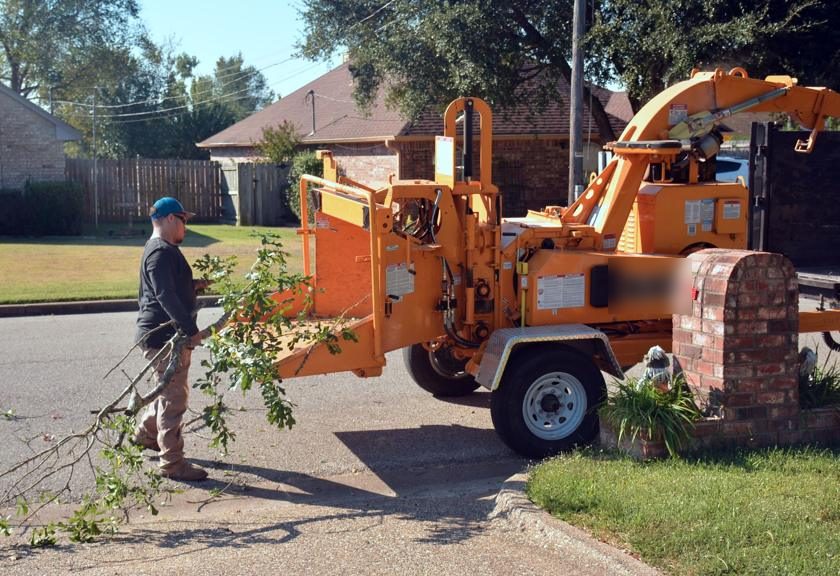
The tree gets pruned or comes down, brush goes through a chipper, and logs are removed or left according to what you chose. Take a walk around the yard before the trucks leave and point out anything that still needs doing.
Nobody can price a tree they haven’t seen, so we don’t try. Looking at it and quoting it is free. These are the things that move the number up or down for each type of job:
| Job | What the price depends on |
|---|---|
| Tree trimming | How tall the tree is, how much is being cut, and what sits beneath the limbs |
| Tree removal | Trunk size and height, how close equipment can get, structures and wires nearby, any lean, and whether the wood is sound |
| Stump grinding | Width at the ground, roots running along the surface, gate and slope access, and the number of stumps |
| Storm damage | What the tree is resting on and the order it has to be dismantled in |
The jobs that run highest tend to share the same features: no way to get a truck near the tree, wood that has been dead long enough to turn brittle, or limbs spread above a roof or a wire. Several trees or stumps priced in one visit usually makes more sense than pricing them one by one.
A real figure needs a real look at your tree. Call 803-267-5527 and we’ll set up a time to come and quote it.
These are fair questions for any tree company, and it pays to have them answered while the quote is being put together.
Raise them during the visit, when the tree is right there to point at.
Rock Hill lies in the Piedmont, a short drive south of Charlotte, with the Catawba River and Lake Wylie along its edge. Willow oaks and water oaks line the older streets. Loblolly pines, sweetgums, red maples and tulip poplars fill in the rest, with crape myrtles and Bradford pears in nearly every subdivision.
Summer brings the weather that does the damage. Afternoon thunderstorms arrive with sudden wind, and the storm of April 2024 dropped large hail and toppled trees across the city. The remains of tropical systems reach this far inland too: Hugo reached Rock Hill in 1989, and Helene in 2024 had city crews out clearing up. A winter ice storm, when one comes, weighs on every branch at the same moment.
Some species cause more calls than others. Water oaks are weak-wooded and their trunks tend to decay from the inside as they age, so a tree can look full and green while being hollow. Bradford pears split where their upright limbs meet. Pines under stress attract bark beetles, which show up as pitch tubes and fine sawdust on the bark. Clumps of mistletoe high in an oak are another thing worth pointing out when we visit.
Inside the city, that means neighborhoods such as Ebenezer, Oakdale, Boyd Hill, Newport and the streets around Winthrop University. Beyond it, we cover Fort Mill, Tega Cay, Lake Wylie, India Hook, Lesslie, Catawba, York and Clover.
Lots along Lake Wylie and the Catawba often slope to the water, which limits where a truck can go and how a tree can be brought down. Duke Energy manages the Lake Wylie shoreline, so it is sensible to check with its lake services office before a tree beside the water is touched. Unsure whether your address is covered? Ask when you call 803-267-5527.
Phone 803-267-5527 or send the form with a line about what the tree is doing. We arrange a visit, look the tree over with you and leave you with a free quote. A tree that has already fallen on something is a phone call, not a form.
That depends on where the tree is growing. A tree in the strip between the sidewalk and the road is one to raise with the City of Rock Hill before anything is cut. Many neighborhoods in Fort Mill, Tega Cay and around the lake have a homeowners association with its own rules about trees. Duke Energy manages the shoreline of Lake Wylie, so a tree at the water’s edge is worth a call to its lake services office first.
Tell us what you’d like and the quote will say. Most people want the brush chipped and the wood taken off the property. Some want the logs left for firewood or the chips left for garden beds. The stump is its own line: if you want it gone, ask for stump grinding to be priced with the tree.
Keep everyone well back from the line and from anything touching it, and report it to your power company. That is their job before it is anyone else’s. A tree that is near a line without touching it is worth mentioning when you call us.
We cover Rock Hill and the towns around it, including Fort Mill, Tega Cay and the Lake Wylie area. Farther out, coverage depends on the job, so the simple thing is to call 803-267-5527 and ask about your address.